Wecome to Dragonwood Chronicles

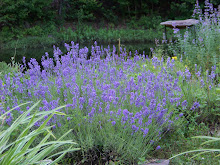
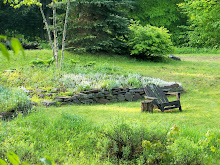
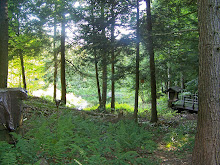
Tucked away deep in the woods at the southern edge of the Tug Hill region of New York. Dragonwood is our off-grid sanctuary. Six acres of pond and gardens bordered by forest on three sides.


The project began in 1995, when after a long search, Debe and I purchased the property from a local logger. To date we have built a cabin, a bridge, out house, two sheds in addition to expansive gardens and stone work. We have a generator, propane lights, refrigerator and grill, a wood stove and modest solar system. A dug well and small stream suitable for watering gardens and other needs and a nearby spring for drinking water.


The Dragonwood Chronicles will serve to document the project with photographs and notes. Future projects will include additions to the cabin, a root cellar and a studio building.


Comments and questions are always welcome.

We enjoy hearing from people who visit Dragonwood Chronicles. Please feel free to leave a comment or ask questions.


Showing posts with label OIl Spill. Show all posts

Saturday, June 19, 2010

President Obama and The Jones Act

President Obama and the Jones Act
By Roland de Beque on Jun 14, 2010 in American History, Disaster Management, Economics, Energy, Environment, Land use, Property Rights, Trade, free market

Any vestiges of goodwill and support for President Obama that I hold are vanishing faster than the Gulf Coast wetlands. Our “green” president is directly responsible for the escalation of the worst man-made environmental disaster in American history.

The catastrophic explosion of Deepwater Horizon on April 20 was not directly caused by Obama, obviously. Does any rational person believe that Obama stands to gain by the situation in the gulf, either by causing it or by standing idly on the sidelines while oil continues to pour into the gulf? But standing idly by is precisely what this administration has done, when getting out of the way is what it needed to do.

According to ForeignPolicy.com, within two weeks of the rig explosion the governments of Canada, Croatia, France, Germany, Ireland, Mexico, the Netherlands, Norway, Romania, Republic of Korea, Spain, Sweden, the United Kingdom and even the United Nations offered assistance. The response of the Obama State Department:

“While there is no need right now that the U.S. cannot meet, the U.S. Coast Guard is assessing these offers of assistance to see if there will be something which we will need in the near future.”

Similarly, De Standaard, a Dutch news site, reports that Belgian and Dutch dredgers possess technology to combat the gigantic spill in the Gulf. Two Belgian companies, DEME and De Nul, and their Dutch competitors are set up to handle the task in part because construction of ships required to undertake a large-scale cleanup would cost twice as much to build in the U.S.

Why would the Obama administration refuse the help of foreign entities? Because of the Merchant Marine Act of 1920. Also known as the Jones Act, the federal legislation is a protectionist measure designed to support the U.S. merchant marine industry. It requires that all goods transported by water between U.S. ports be carried by ships flying the U.S. flag, constructed in the United States, and owned and crewed by U.S. citizens or permanent residents.

Written into the Jones Act are provisions that allow for waivers in cases of national emergency or strategic interest. Even President Bush, in his less-than-stellar response to Hurricane Katrina, did not hesitate to waive the Jones Act in order speed up the distribution of oil and gasoline to areas where pipeline transmission systems were damaged or destroyed.

Although I expect President Obama to waive the Jones Act eventually, why did he not act to do so when offers of assistance started coming in? Some have suggested it was a sense of pride, but I believe it stems from Obama’s belief that his administration—the federal government—is and should be the solver of all problems.

There will no doubt be plenty of blame for this catastrophe, but if there is anything that Obama could have done to forestall or lessen the amount of damage to the Gulf Coast he should have done it. His continuing failure to do so is contributing to an environmental nightmare beyond belief. This is an epic failure by the Obama Administration.

This is the time to waive the Jones Act. This is the time to issue a plea to anyone in private industry—foreign or domestic—who has a potential, even unproven, method to clean up afflicted coastline or to protect threatened areas to get to the Gulf as soon as possible and put it to work in a coordinated effort. This is the time to throw out the rulebook. This is the time for Obama to remove the roadblocks that keep Gulf Coast localities from receiving the supplies they have requested. This is the time to let local and state governments to do whatever they need to do and to do it right now.

The ecosystem of the Gulf Coast is going to be altered. Wetlands will disappear, likely to be replaced with open water. Life up and down the food chain will suffer and die. In some instances whole species face the possibility of extinction. How we respond will define us as a nation and, ultimately as a species.

Friday, June 18, 2010

Gov't Shares Blame for Oil Spill

Libertarians say government shares blame with BP for oil spill

WASHINGTON - Wes Benedict, executive director of the Libertarian Party, issued the following statement today:

"The federal government and BP share the blame for the large oil spill in the Gulf of Mexico.

"When the CEO of BP appeared at a Congressional hearing yesterday, Republicans and Democrats predictably engaged in finger-pointing and blame-ducking, trying to score political points. Their fingers should have been pointed at themselves.

"When President Obama gave his Oval Office speech on Tuesday, there was one important word missing: the word 'liability.' The president never mentioned that, thanks to liability caps provided by the federal government, BP was able to engage in riskier activities than it would have otherwise. If BP had known in advance that it would be fully liable for all damages related to an oil spill, it probably would have taken greater safeguards. When you know that your liability will be strictly limited, cutting corners becomes a lot more attractive.

"The spill will cause a lot of damage to the property and livelihood of people living along the Gulf. We have a well-developed system of civil courts to help people obtain compensation. Unfortunately, the legislative and executive branches have inappropriately trampled on this territory, and they seem to be trying to take the place of the courts.

"The president has apparently convinced BP to put $20 billion in some kind of compensation account. He said in his speech that it will be 'administered by an independent third party.' Will this third party be able to decide what 'legitimate claims' are, and how much they should receive? Assessing damages should be done by courts, not by political bureaucrats appointed in backroom deals between the president and a large corporation.

"The president could have taken the opportunity to talk about getting government out of the energy industry, and allowing the free market to guide the future of energy production. Unfortunately, he instead blamed the free market for government failures, and discussed his hopes of increasing government interference in the energy industry.

"For decades, Libertarians have warned against putting trust in government regulatory bureaucracies like the Minerals Management Service (MMS). While costing the taxpayers a lot of money, these agencies generally fail to deliver the kind of protections they promise, they tend to become corrupt, and they discourage vigilance on the part of citizens by lulling them into a false sense of security.

"When large companies and the government start working together, the results can be disastrous. Congressional liability caps, the MMS bureaucracy, and BP have all cooperated to create a costly disaster that should never have happened."

For more information, or to arrange an interview, call LP Executive Director Wes Benedict at 202-333-0008 ext. 222.

The LP is America's third-largest political party, founded in 1971. The Libertarian Party stands for free markets and civil liberties. You can find more information on the Libertarian Party at our website. http://www.lp.org/

Driveway

Off The Grid

Off The Grid
Click on Image